🎉 Up to 70% Off Selected ItemsShop Sale
HomeStore

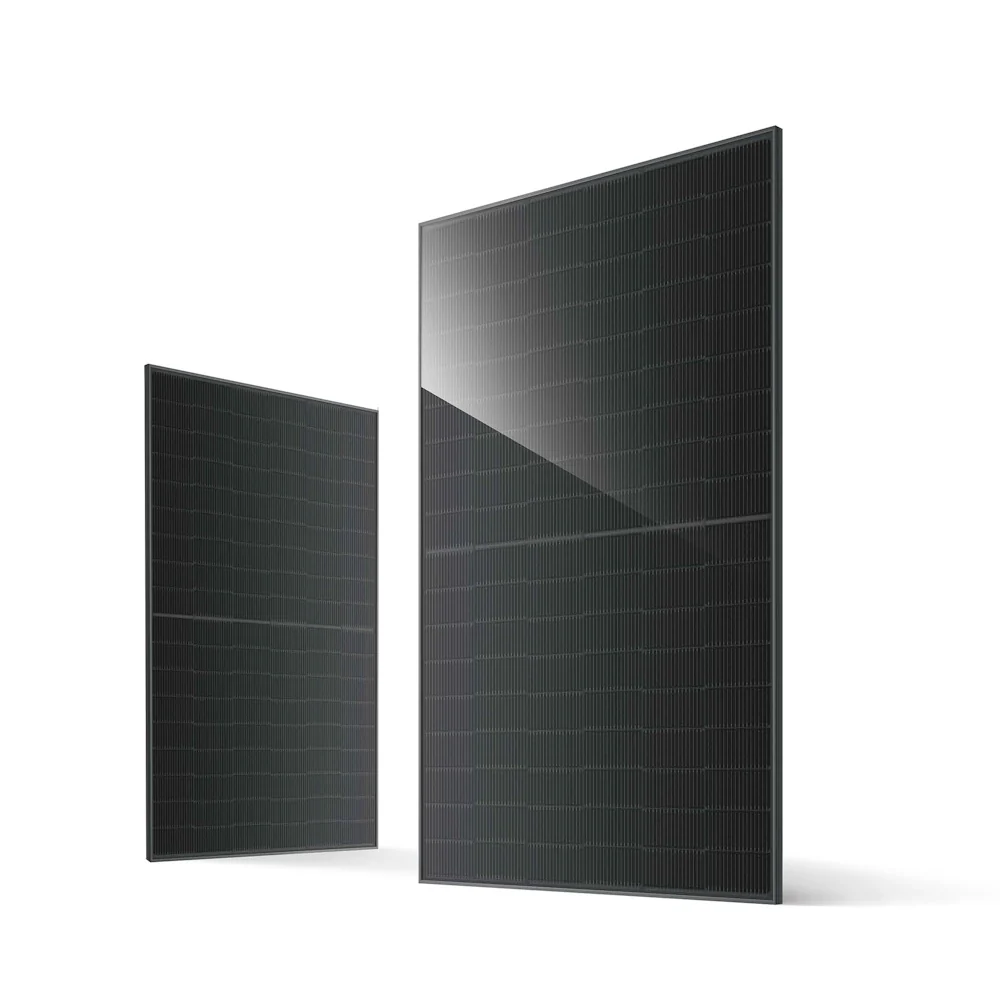
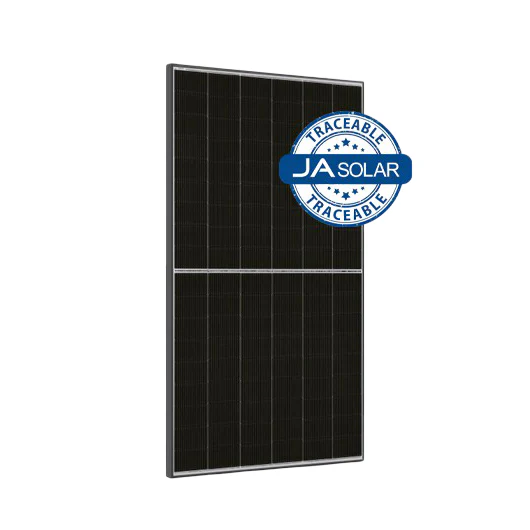
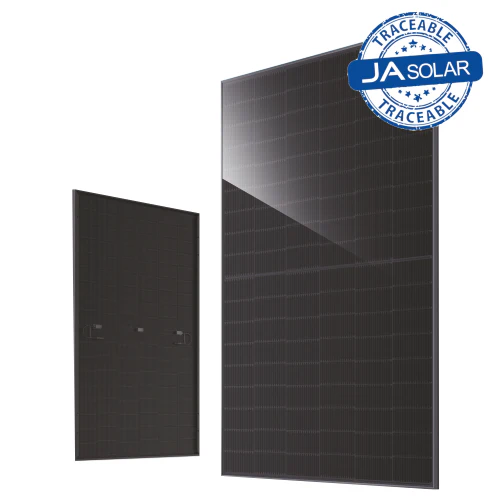
JA Solar 460W N-type Double Glass Monofacial LR Traceable 54 Cell All Black MC4

Product image 1
Product image 2

JA Solar 460W N-type Double Glass Monofacial LR Traceable 54 Cell All Black MC4

JA Solar 460W N-type Double Glass Monofacial LR Traceable 54 Cell All Black MC4

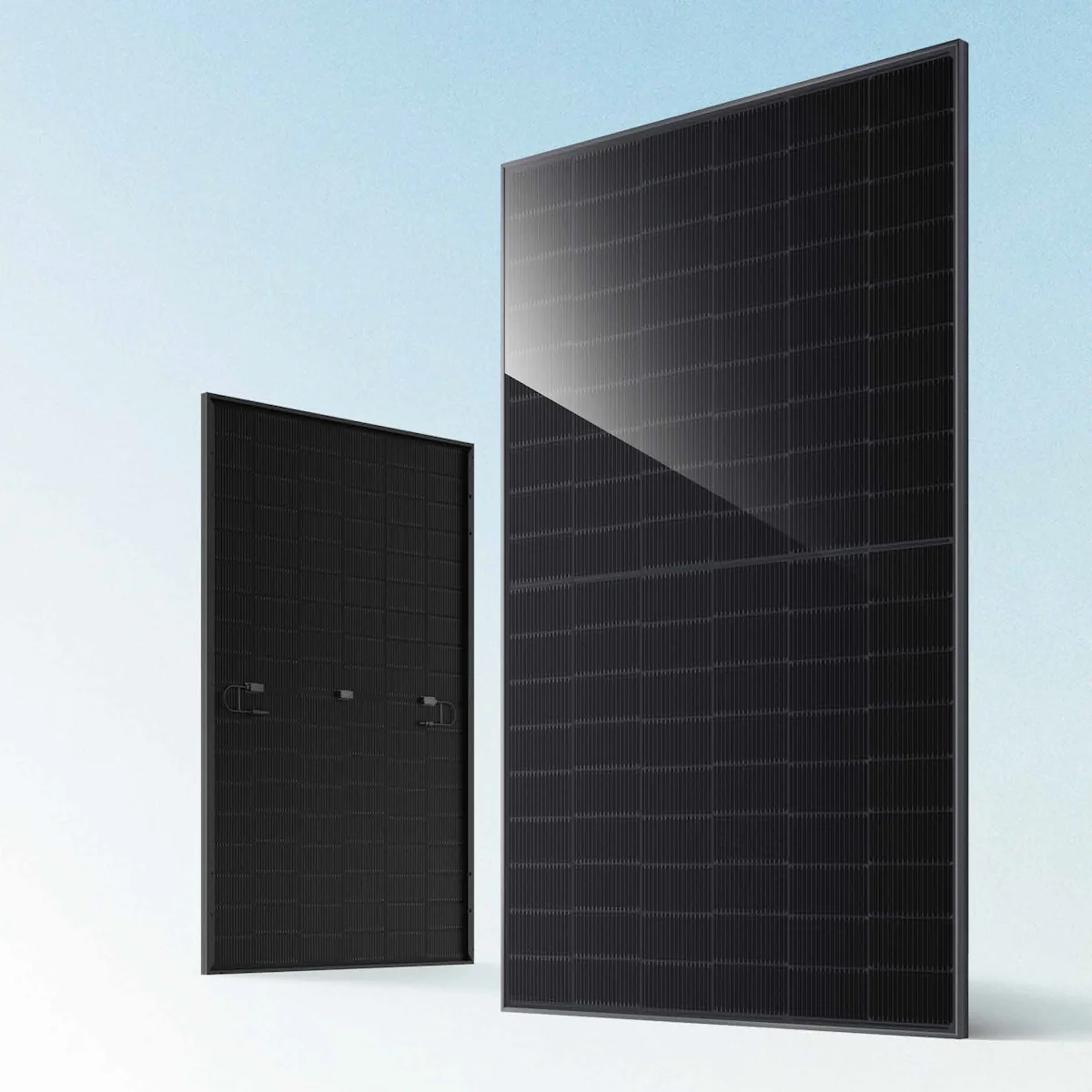
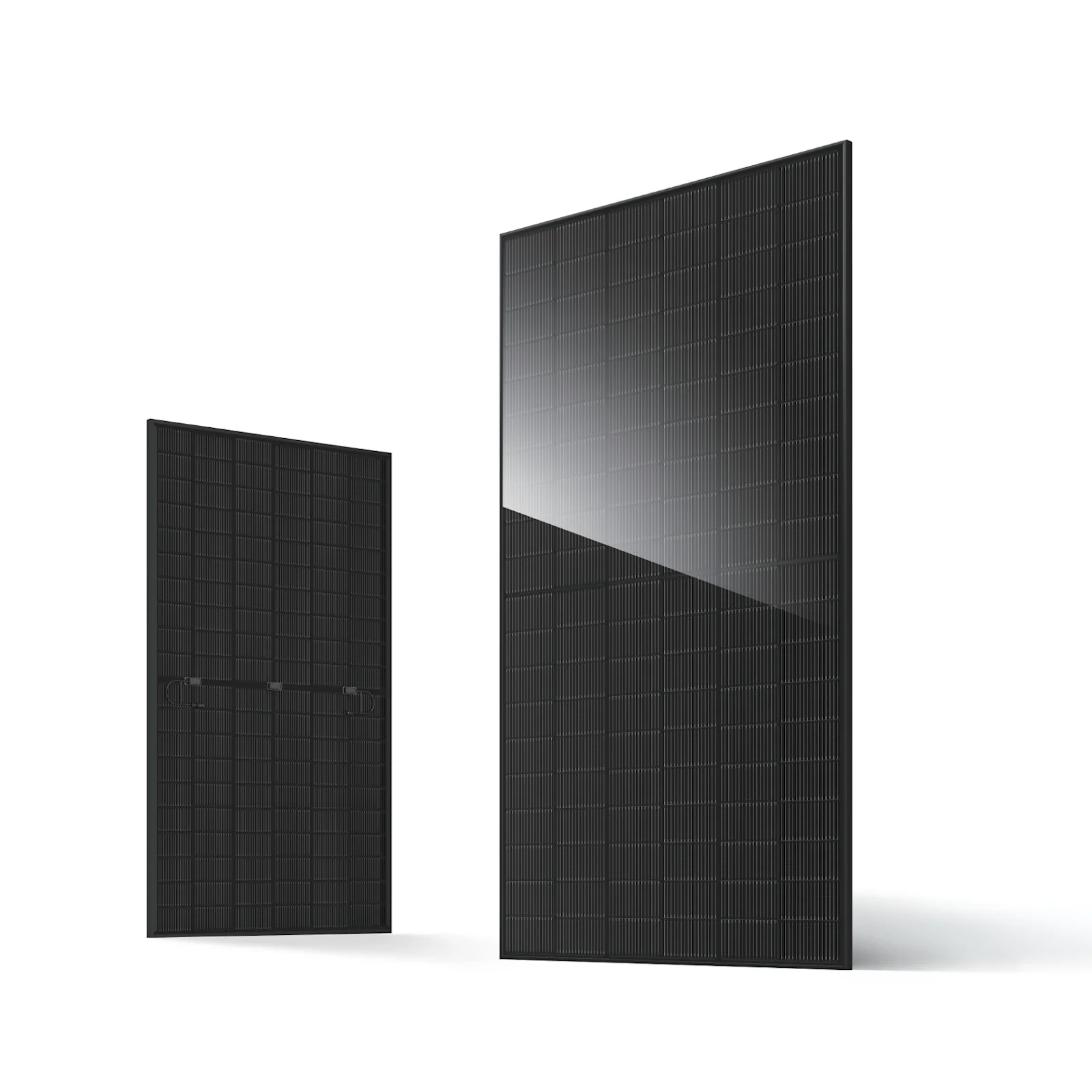
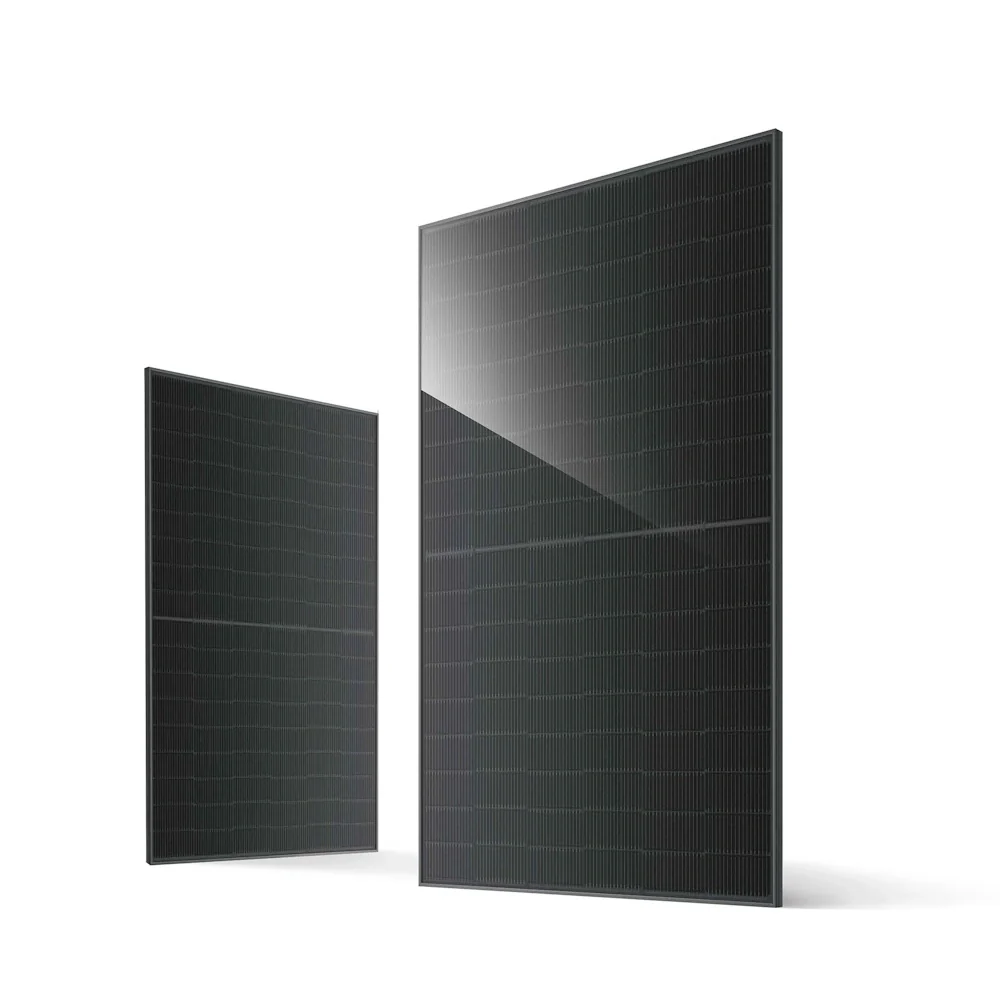
The JA Solar JAM54D41-460 LR is a 460 W N-type TOPCon all-black monofacial solar panel from JA Solar’s DeepBlue 4.0 series. It delivers 23 % module efficiency from 108 laser-traceable half-cut cells in a double-glass, full-black format measuring 1,762 × 1,134 × 30 mm and weighing 22 kg. N-type TOPCon cell technology gives this panel a significant advantage over standard P-type PERC panels: virtually zero light-induced degradation (LID), a superior temperature coefficient of −0.29 %/°C, and better energy yield in overcast and low-irradiance conditions — all of which matter in the UK climate. The double-glass construction eliminates the rear polymeric backsheet, improving long-term durability, fire resistance, and resistance to potential-induced degradation (PID). The all-black aesthetic — black frame, black backsheet glass and black cells — makes this the preferred choice for visible residential rooftop installations where appearance is important. Supplied with genuine MC4 connectors on 1,200 mm cables. MCS eligible. 25-year product warranty; 30-year linear power output warranty.

460 W
Rated output
23%
Module efficiency
N-type TOPCon
Cell technology
−0.29 %/°C
Temp. coefficient
30 yrs
Performance warranty
All Black
Frame + glass + cells
ℹ MCS eligible — qualifies for UK Smart Export Guarantee (SEG): This panel is eligible for MCS-certified solar installations in the UK. Installations using MCS-certified components and an MCS-registered installer qualify the homeowner for the Smart Export Guarantee (SEG), allowing payment for electricity exported to the grid. Confirm MCS reference with your installer prior to purchase.
N-type TOPCon vs Standard P-type PERC — Why It Matters
This panel (N-type TOPCon) Standard P-type PERC
Efficiency (module) 23 % Typically 20 – 21 %
Light-induced degradation (LID) Virtually zero 0.5 – 2 % initial loss
Temperature coefficient (Pmax) −0.29 %/°C Typically −0.35 %/°C
Low-light performance Superior (enhanced IR response) Good
30-year output retention ≥87.4 % of rated power Typically ≥80 %
Degradation rate (annual) ≤0.40 % per year 0.55 % per year (typical)

Performance comparisons are indicative. STC conditions apply. Real-world yield depends on system design, orientation, shading and local climate.

Key Features
N-type TOPCon at 23 % Efficiency — More Power from the Same Roof Area
N-type TOPCon (Tunnel Oxide Passivated Contact) cells achieve higher efficiency than standard PERC cells by passivating the rear contact with a thin tunnel oxide layer, minimising electron recombination losses. At 23 % module efficiency, this panel generates more electricity per square metre than virtually all P-type PERC panels on the market. On a typical UK semi-detached roof with space for 10 panels, the efficiency gain over a 20 % panel translates to approximately 15 % more annual energy yield from the same footprint. N-type cells also exhibit virtually zero light-induced degradation (LID): P-type cells can lose 0.5 – 2 % of output in their first few hours of exposure; N-type cells do not suffer this effect.
23% efficiencyN-type TOPConVirtually zero LID
Double Glass Monofacial — 30+ Year Durability Without a Backsheet
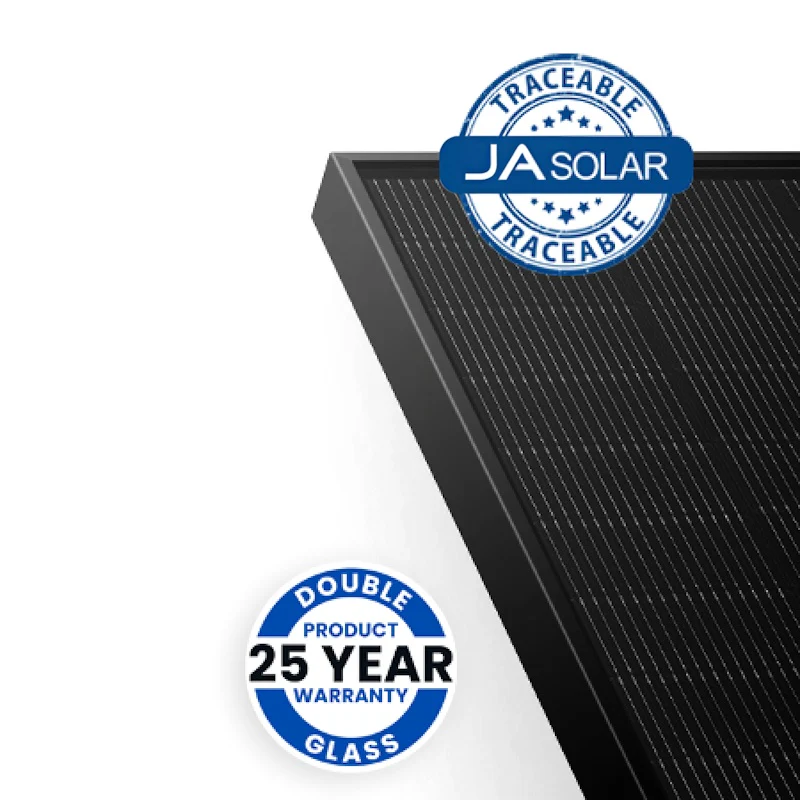
Rather than a conventional polymer backsheet, the rear of this panel uses a second sheet of tempered glass (3.2 mm rear glass). The double-glass construction eliminates the risk of backsheet cracking, delamination, and moisture ingress that can occur over time with polymer backsheets. Glass also has far superior resistance to potential-induced degradation (PID), UV yellowing and fire. The monofacial design (opaque rear glass) is chosen deliberately here: it maintains the full all-black aesthetic and is the appropriate choice for pitched roof installations where the rear face is not exposed to light. Rated for snow loads up to 5,400 Pa and wind loads up to 2,400 Pa.
Double glass (no backsheet)5,400 Pa snow load2,400 Pa wind loadPID resistant
All-Black Aesthetic — Frame, Cells and Rear Glass
Every visible component of this panel is black: anodised aluminium black frame, black rear glass, black busbars and black cell matrix. There is no silver frame, no white backsheet and no visible silver interconnects. The result is a uniform, low-contrast appearance that blends with dark tile roofs (slate, anthracite concrete, dark clay) and suits architectural installations where the solar array should be visually unobtrusive. The all-black design also helps in snow shedding: the darker surface absorbs more heat, accelerating snow melt and reducing downtime from snow coverage in winter months.
Full all-blackBlack frame + cells + rear glassSnow shedding benefit
LR Laser Traceability — Full Supply Chain Transparency
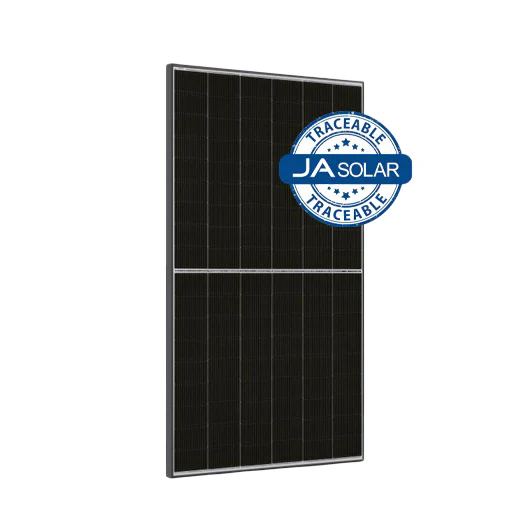
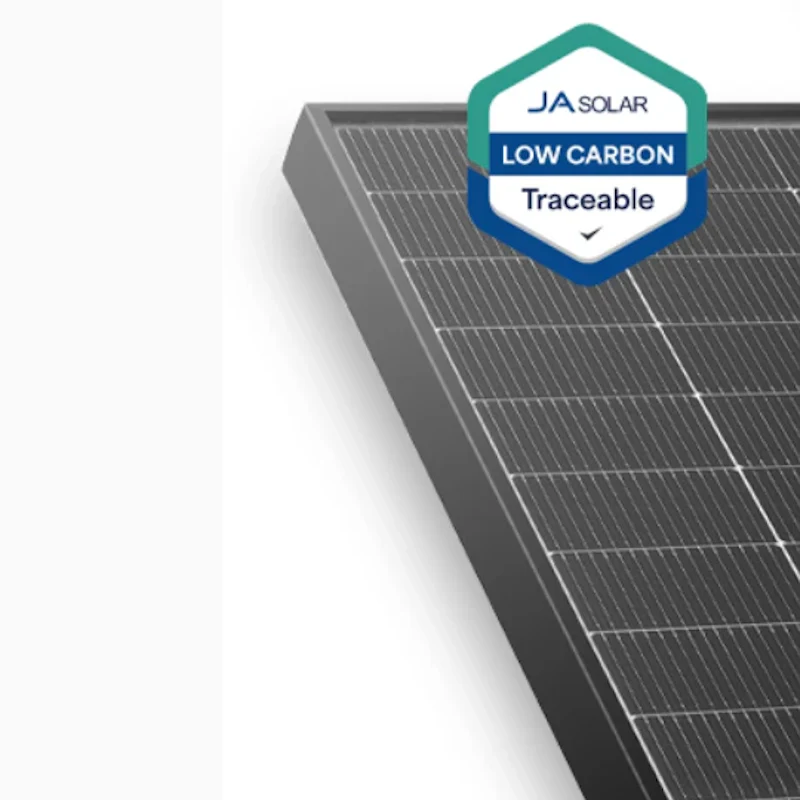
The ‘LR’ designation indicates that every individual cell in this module is laser-marked with a unique traceable identifier. This allows the cell’s origin, manufacturing batch, and quality control records to be tracked throughout the supply chain from wafer to finished module. Laser traceability is increasingly specified by commercial installers, developers and ESG-conscious buyers as part of responsible sourcing requirements, and is relevant to procurement policies relating to modern slavery and ethical supply chains. JA Solar’s traceability programme is independently verified.
Laser cell traceabilitySupply chain verifiedESG procurement eligible
MBB 16-Busbar Half-Cell Architecture — Shade Tolerance and Reliability
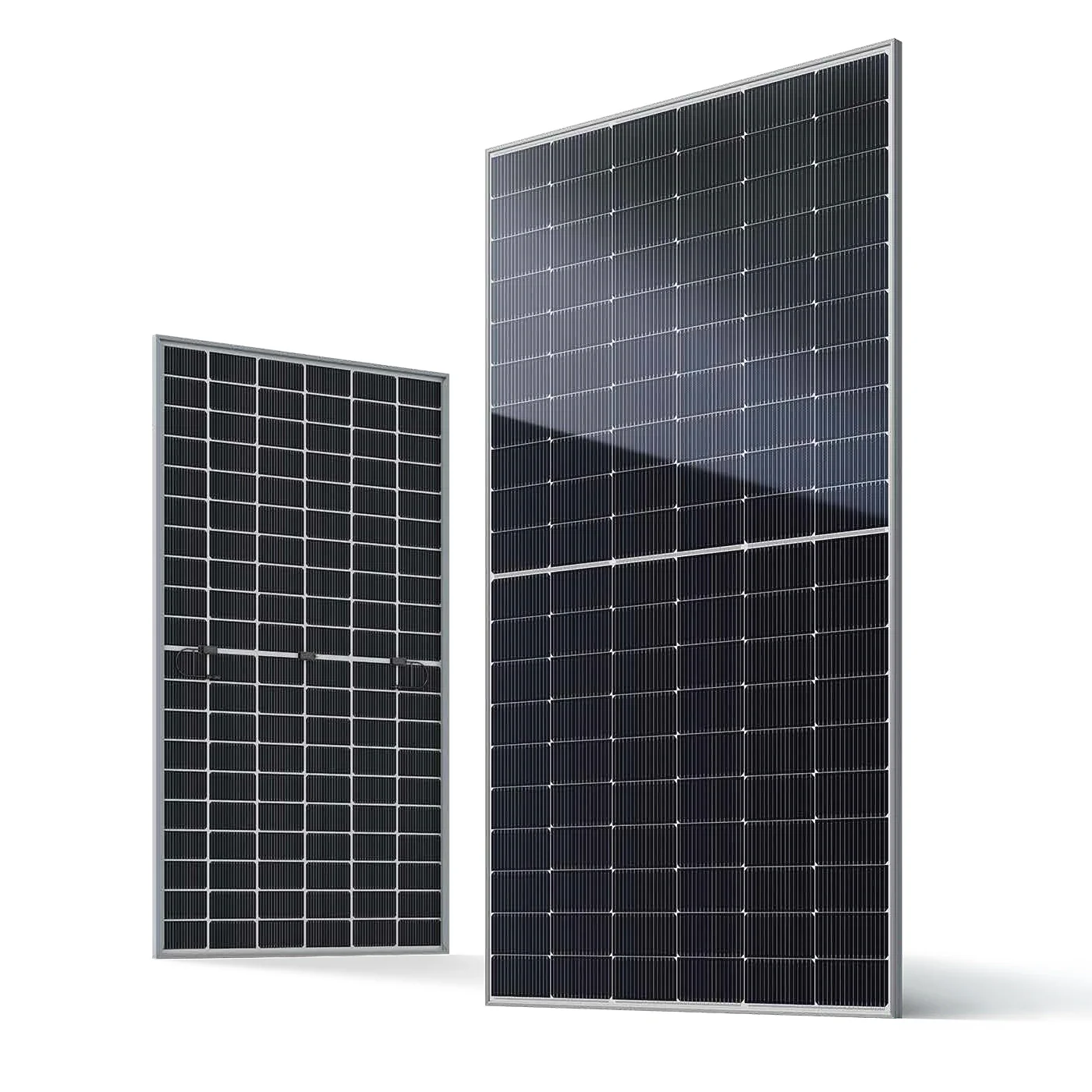
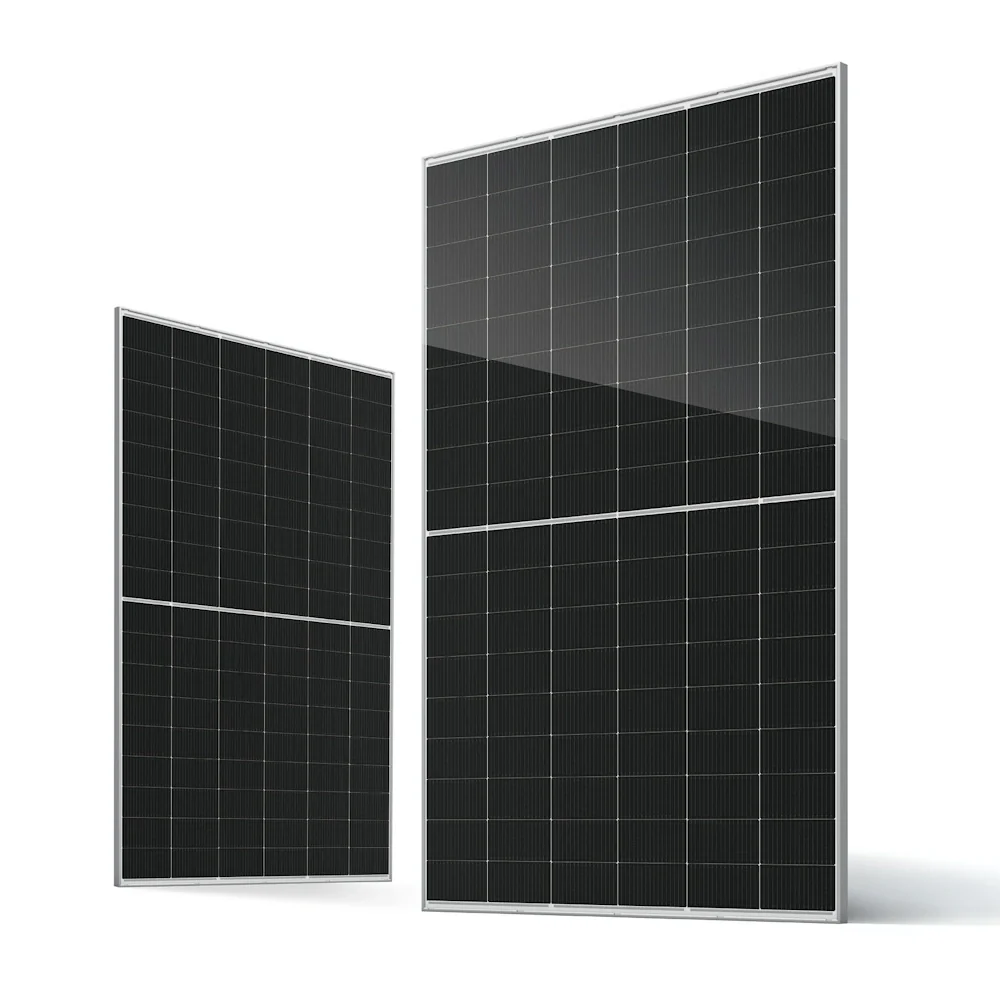
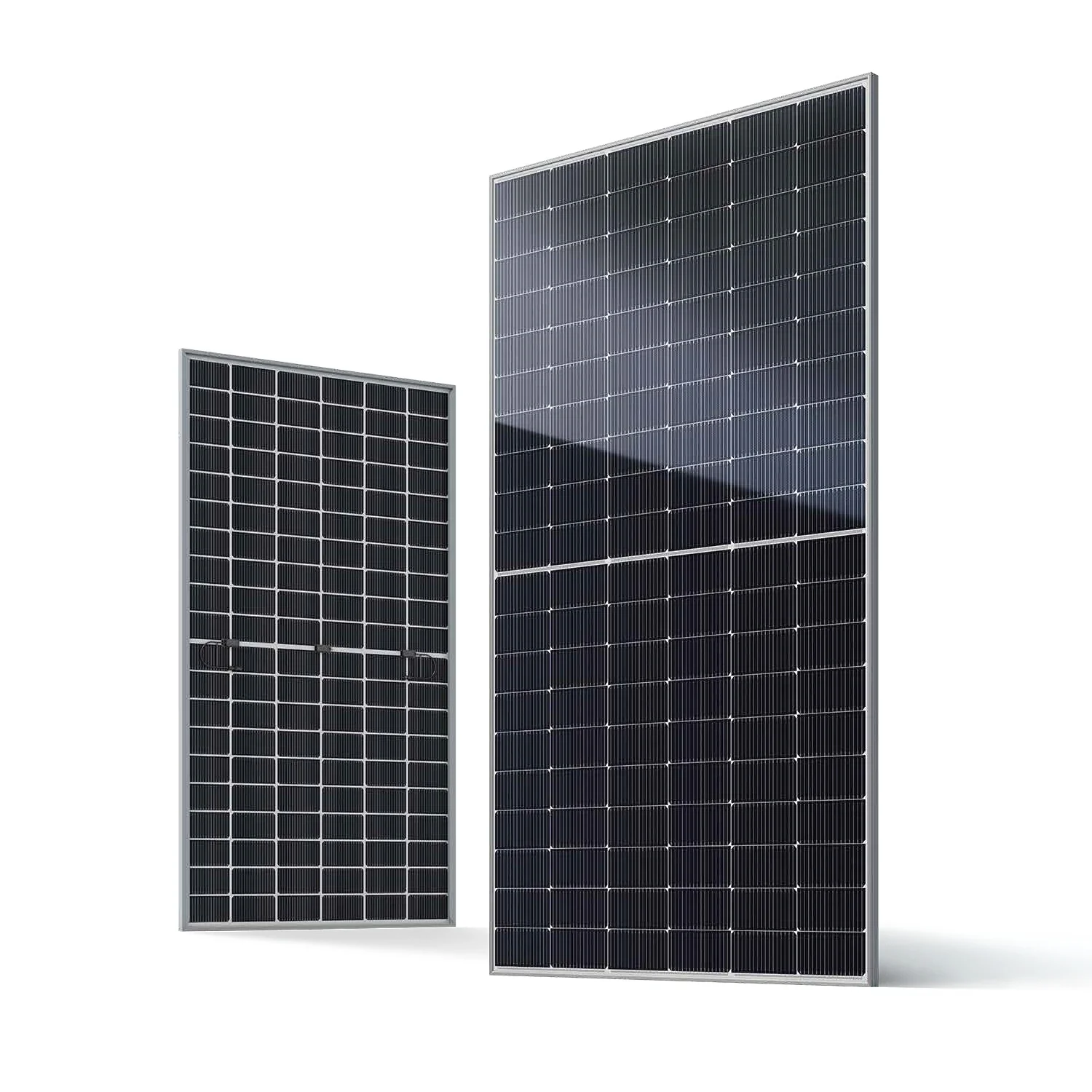
The 108 cells in this panel are half-cut: each standard cell is divided into two, reducing resistive losses within the module. Half-cut cells lower the operating current of each cell by half, which means resistive (I²R) losses are reduced by 75 % compared to full-cell modules of the same size. The 16 multi-busbar (MBB) design further distributes current collection across more contact points, reducing the impact of micro-cracks and improving shade tolerance. Three bypass diodes in the IP68 junction box provide cell-level shade bypassing, limiting the impact of partial shading on overall string output.
108 half-cut cells16 busbars (MBB)3 bypass diodesIP68 junction box
Superior UK Climate Performance — Low-Light and Temperature Coefficient
The UK receives around 1,000 – 1,200 hours of sunshine annually, much of it at low irradiance. N-type TOPCon cells generate a higher proportion of their rated output at low light intensities due to enhanced infrared (IR) spectral response, making them particularly well suited to overcast British conditions. The temperature coefficient of −0.29 %/°C means that for every degree above 25°C, this panel loses only 0.29 % of output — compared to −0.35 % for a typical PERC module. In a 50°C cell temperature (common on a warm UK summer day), this panel retains approximately 3 % more of its rated power than a standard PERC panel.
−0.29%/°C temperature coefficientEnhanced low-light responseBetter UK climate yield
30-Year Linear Power Guarantee — ≥87.4 % After Three Decades
JA Solar’s performance warranty provides specific annual degradation guarantees rather than a simple end-point value: no more than 2 % degradation in the first year, then ≤0.40 % per year thereafter. After 30 years, the panel is guaranteed to produce at least 87.4 % of its original rated output. This is significantly better than the 80 % retention guaranteed by most standard P-type modules, and reflects the lower inherent degradation rate of N-type cells. A separate 25-year product warranty covers defects in materials and workmanship. JA Solar is a Bloomberg Tier 1 module manufacturer, providing confidence in long-term warranty support.
30-yr linear performance≥87.4% after 30 years25-yr product warrantyBloomberg Tier 1
Technical Specifications
Electrical Parameters at STC (1,000 W/m², 25°C, AM 1.5)
Rated maximum power (Pmax) 460 W (+0/−5 W tolerance)
Module efficiency 23.0 %
Maximum power voltage (Vmp) 33.68 V
Maximum power current (Imp) 13.66 A
Open circuit voltage (Voc) 40.6 V
Short circuit current (Isc) 14.43 A
Temperature Coefficients
Power (Pmax) −0.29 %/°C
Voltage (Voc) −0.26 %/°C
Current (Isc) +0.046 %/°C
Normal operating cell temperature (NOCT) 44 ± 2 °C
Mechanical
Dimensions (L × W × D) 1,762 × 1,134 × 30 mm
Weight 22 kg
Front glass 3.2 mm tempered
Rear glass 3.2 mm tempered (double glass, monofacial)
Frame Anodised aluminium, all-black
Junction box IP68, 3 bypass diodes
Connectors MC4 (genuine)
Cable 4 mm², 1,200 mm (both leads)
Cell Technology
Cell type N-type TOPCon monocrystalline (Bycium+)
Cell configuration 108 half-cut cells (54 × 2)
Multi-busbar (MBB) 16 busbars per cell
Traceability Laser-traceable (LR designation)
Electrical Limits
Maximum system voltage 1,500 V DC
Series fuse rating 30 A
Operating temperature −40 – +85 °C
Mechanical Loads
Max snow load 5,400 Pa (front)
Max wind load 2,400 Pa
Warranty
Product warranty 25 years
Power output warranty 30 years linear (max 2 % year 1; ≤0.40 %/yr thereafter)
Output retention at 30 years ≥87.4 %
Certifications
Module performance IEC 61215
Module safety IEC 61730
Quality management ISO 9001
Environmental management ISO 14001
Health & safety management ISO 45001
Advanced testing IEC 62941
MCS Eligible (BABT 8515 reference)
Product Reference
Part number JAM54D-41-460-LR-TS-AB-MC4
Series JA Solar DeepBlue 4.0
Manufacturer JA Solar Technology Co., Ltd. (Bloomberg Tier 1)
Frequently Asked Questions
What does ‘monofacial’ mean, and why choose it over a bifacial panel for a UK roof?
A monofacial panel has an opaque rear face (in this case, dark glass) and only generates power from the front. A bifacial panel has a transparent rear face that also captures reflected light from behind the panel. For a pitched UK roof, where the rear of the panel faces the roof surface with very little reflected light, bifacial rear-side gain is negligible — typically less than 2 % in most residential pitch-roof conditions. Bifacial panels are most beneficial in ground-mounted systems on light-coloured ground or elevated racking where reflected albedo light can reach the rear. For a standard UK rooftop installation, the monofacial double-glass version offers the same front-side performance with full-black aesthetics.
What is ‘LR traceable’ and does it affect panel performance?
LR stands for Laser-traceable. Each individual cell in the module has a unique laser-etched identifier that allows it to be traced back through the manufacturing supply chain. This does not affect electrical performance. Its importance is in supply chain transparency: it enables verification of cell origin and quality history, and supports compliance with ethical sourcing and modern slavery policies that are increasingly required by commercial project developers and councils. For residential customers, LR traceability is a quality indicator rather than a performance feature.
Will this panel work well on a south-facing UK roof in overcast conditions?
Yes — and this is one of the primary reasons to choose N-type TOPCon over standard PERC. N-type cells have an enhanced infrared (IR) spectral response, which means they continue to generate power more efficiently when irradiance is low (overcast skies, early morning, late afternoon). In a UK context, a significant proportion of annual energy yield comes from these low-irradiance conditions, particularly from October to March. The −0.29 %/°C temperature coefficient also means less power is lost on hot summer days, boosting performance in the warm months relative to PERC panels.
What is the difference between the JAM54D40 and JAM54D41 series?
Both are JA Solar DeepBlue 4.0 series N-type TOPCon modules in the same physical format. The main difference is the rear face: JAM54D40 variants are typically bifacial with a transparent rear glass, producing power from both sides. JAM54D41 variants include both bifacial (LB suffix) and monofacial (opaque rear glass) all-black versions — this product is the monofacial all-black. The JAM54D41 full-black finish achieves this by using an opaque black rear glass rather than transparent glass, maintaining the all-black visual and making it the correct choice for visible roof installations.
How many panels of this size can I fit on a typical UK semi-detached roof?
A typical south-facing main roof slope on a UK semi-detached house is approximately 4 m wide and 4 m deep (16 m²). Each panel is 1.762 m × 1.134 m = 2.0 m². In portrait orientation (1.762 m tall), two columns of two panels (4 panels) fit comfortably with standard mounting clearances. In landscape orientation (1.134 m tall), three rows of two panels (6 panels) is a common configuration. Six panels × 460 W = 2,760 W peak — a typical UK residential 2.76 kWp system. Always allow 100 mm clearance from the ridge, gutters and verge edges for mounting, and work with your installer to optimise the layout for your specific roof dimensions.
What is the clamp position and what torque should be used for mounting?
The JAM54D41-460 double glass module uses mid-clamps only — no end clamps on the short edge. Clamps are positioned on the long sides of the frame. The clamping area should be within the marked clamp zone on the frame. For standard aluminium rail mounting, use M8 bolts at 22 N m torque for mid-clamp mounting. Always follow the JA Solar module installation guide for your specific racking system, as incorrect clamping can void the mechanical warranty.
Related Products
JA Solar 465W N-type LR Traceable Black Frame
Black frame with white backsheet — same cell tech, silver/white back
Solis Hybrid Inverter (RHI Series)
Compatible single- and three-phase hybrid inverters for solar+storage
Growatt MIC 1000TL-X Solar Inverter
Single-phase string inverter for small residential solar arrays
myenergi Eddi Solar PV Diverter
Diverts surplus solar generation to hot water immersion heater
$86.13

Original: $287.10

-70%
JA Solar 460W N-type Double Glass Monofacial LR Traceable 54 Cell All Black MC4

$287.10

$86.13

Product Information

Shipping & Returns

Description

The JA Solar JAM54D41-460 LR is a 460 W N-type TOPCon all-black monofacial solar panel from JA Solar’s DeepBlue 4.0 series. It delivers 23 % module efficiency from 108 laser-traceable half-cut cells in a double-glass, full-black format measuring 1,762 × 1,134 × 30 mm and weighing 22 kg. N-type TOPCon cell technology gives this panel a significant advantage over standard P-type PERC panels: virtually zero light-induced degradation (LID), a superior temperature coefficient of −0.29 %/°C, and better energy yield in overcast and low-irradiance conditions — all of which matter in the UK climate. The double-glass construction eliminates the rear polymeric backsheet, improving long-term durability, fire resistance, and resistance to potential-induced degradation (PID). The all-black aesthetic — black frame, black backsheet glass and black cells — makes this the preferred choice for visible residential rooftop installations where appearance is important. Supplied with genuine MC4 connectors on 1,200 mm cables. MCS eligible. 25-year product warranty; 30-year linear power output warranty.

460 W
Rated output
23%
Module efficiency
N-type TOPCon
Cell technology
−0.29 %/°C
Temp. coefficient
30 yrs
Performance warranty
All Black
Frame + glass + cells
ℹ MCS eligible — qualifies for UK Smart Export Guarantee (SEG): This panel is eligible for MCS-certified solar installations in the UK. Installations using MCS-certified components and an MCS-registered installer qualify the homeowner for the Smart Export Guarantee (SEG), allowing payment for electricity exported to the grid. Confirm MCS reference with your installer prior to purchase.
N-type TOPCon vs Standard P-type PERC — Why It Matters
This panel (N-type TOPCon) Standard P-type PERC
Efficiency (module) 23 % Typically 20 – 21 %
Light-induced degradation (LID) Virtually zero 0.5 – 2 % initial loss
Temperature coefficient (Pmax) −0.29 %/°C Typically −0.35 %/°C
Low-light performance Superior (enhanced IR response) Good
30-year output retention ≥87.4 % of rated power Typically ≥80 %
Degradation rate (annual) ≤0.40 % per year 0.55 % per year (typical)

Performance comparisons are indicative. STC conditions apply. Real-world yield depends on system design, orientation, shading and local climate.

Key Features
N-type TOPCon at 23 % Efficiency — More Power from the Same Roof Area
N-type TOPCon (Tunnel Oxide Passivated Contact) cells achieve higher efficiency than standard PERC cells by passivating the rear contact with a thin tunnel oxide layer, minimising electron recombination losses. At 23 % module efficiency, this panel generates more electricity per square metre than virtually all P-type PERC panels on the market. On a typical UK semi-detached roof with space for 10 panels, the efficiency gain over a 20 % panel translates to approximately 15 % more annual energy yield from the same footprint. N-type cells also exhibit virtually zero light-induced degradation (LID): P-type cells can lose 0.5 – 2 % of output in their first few hours of exposure; N-type cells do not suffer this effect.
23% efficiencyN-type TOPConVirtually zero LID
Double Glass Monofacial — 30+ Year Durability Without a Backsheet
Rather than a conventional polymer backsheet, the rear of this panel uses a second sheet of tempered glass (3.2 mm rear glass). The double-glass construction eliminates the risk of backsheet cracking, delamination, and moisture ingress that can occur over time with polymer backsheets. Glass also has far superior resistance to potential-induced degradation (PID), UV yellowing and fire. The monofacial design (opaque rear glass) is chosen deliberately here: it maintains the full all-black aesthetic and is the appropriate choice for pitched roof installations where the rear face is not exposed to light. Rated for snow loads up to 5,400 Pa and wind loads up to 2,400 Pa.
Double glass (no backsheet)5,400 Pa snow load2,400 Pa wind loadPID resistant
All-Black Aesthetic — Frame, Cells and Rear Glass
Every visible component of this panel is black: anodised aluminium black frame, black rear glass, black busbars and black cell matrix. There is no silver frame, no white backsheet and no visible silver interconnects. The result is a uniform, low-contrast appearance that blends with dark tile roofs (slate, anthracite concrete, dark clay) and suits architectural installations where the solar array should be visually unobtrusive. The all-black design also helps in snow shedding: the darker surface absorbs more heat, accelerating snow melt and reducing downtime from snow coverage in winter months.
Full all-blackBlack frame + cells + rear glassSnow shedding benefit
LR Laser Traceability — Full Supply Chain Transparency
The ‘LR’ designation indicates that every individual cell in this module is laser-marked with a unique traceable identifier. This allows the cell’s origin, manufacturing batch, and quality control records to be tracked throughout the supply chain from wafer to finished module. Laser traceability is increasingly specified by commercial installers, developers and ESG-conscious buyers as part of responsible sourcing requirements, and is relevant to procurement policies relating to modern slavery and ethical supply chains. JA Solar’s traceability programme is independently verified.
Laser cell traceabilitySupply chain verifiedESG procurement eligible
MBB 16-Busbar Half-Cell Architecture — Shade Tolerance and Reliability
The 108 cells in this panel are half-cut: each standard cell is divided into two, reducing resistive losses within the module. Half-cut cells lower the operating current of each cell by half, which means resistive (I²R) losses are reduced by 75 % compared to full-cell modules of the same size. The 16 multi-busbar (MBB) design further distributes current collection across more contact points, reducing the impact of micro-cracks and improving shade tolerance. Three bypass diodes in the IP68 junction box provide cell-level shade bypassing, limiting the impact of partial shading on overall string output.
108 half-cut cells16 busbars (MBB)3 bypass diodesIP68 junction box
Superior UK Climate Performance — Low-Light and Temperature Coefficient
The UK receives around 1,000 – 1,200 hours of sunshine annually, much of it at low irradiance. N-type TOPCon cells generate a higher proportion of their rated output at low light intensities due to enhanced infrared (IR) spectral response, making them particularly well suited to overcast British conditions. The temperature coefficient of −0.29 %/°C means that for every degree above 25°C, this panel loses only 0.29 % of output — compared to −0.35 % for a typical PERC module. In a 50°C cell temperature (common on a warm UK summer day), this panel retains approximately 3 % more of its rated power than a standard PERC panel.
−0.29%/°C temperature coefficientEnhanced low-light responseBetter UK climate yield
30-Year Linear Power Guarantee — ≥87.4 % After Three Decades
JA Solar’s performance warranty provides specific annual degradation guarantees rather than a simple end-point value: no more than 2 % degradation in the first year, then ≤0.40 % per year thereafter. After 30 years, the panel is guaranteed to produce at least 87.4 % of its original rated output. This is significantly better than the 80 % retention guaranteed by most standard P-type modules, and reflects the lower inherent degradation rate of N-type cells. A separate 25-year product warranty covers defects in materials and workmanship. JA Solar is a Bloomberg Tier 1 module manufacturer, providing confidence in long-term warranty support.
30-yr linear performance≥87.4% after 30 years25-yr product warrantyBloomberg Tier 1
Technical Specifications
Electrical Parameters at STC (1,000 W/m², 25°C, AM 1.5)
Rated maximum power (Pmax) 460 W (+0/−5 W tolerance)
Module efficiency 23.0 %
Maximum power voltage (Vmp) 33.68 V
Maximum power current (Imp) 13.66 A
Open circuit voltage (Voc) 40.6 V
Short circuit current (Isc) 14.43 A
Temperature Coefficients
Power (Pmax) −0.29 %/°C
Voltage (Voc) −0.26 %/°C
Current (Isc) +0.046 %/°C
Normal operating cell temperature (NOCT) 44 ± 2 °C
Mechanical
Dimensions (L × W × D) 1,762 × 1,134 × 30 mm
Weight 22 kg
Front glass 3.2 mm tempered
Rear glass 3.2 mm tempered (double glass, monofacial)
Frame Anodised aluminium, all-black
Junction box IP68, 3 bypass diodes
Connectors MC4 (genuine)
Cable 4 mm², 1,200 mm (both leads)
Cell Technology
Cell type N-type TOPCon monocrystalline (Bycium+)
Cell configuration 108 half-cut cells (54 × 2)
Multi-busbar (MBB) 16 busbars per cell
Traceability Laser-traceable (LR designation)
Electrical Limits
Maximum system voltage 1,500 V DC
Series fuse rating 30 A
Operating temperature −40 – +85 °C
Mechanical Loads
Max snow load 5,400 Pa (front)
Max wind load 2,400 Pa
Warranty
Product warranty 25 years
Power output warranty 30 years linear (max 2 % year 1; ≤0.40 %/yr thereafter)
Output retention at 30 years ≥87.4 %
Certifications
Module performance IEC 61215
Module safety IEC 61730
Quality management ISO 9001
Environmental management ISO 14001
Health & safety management ISO 45001
Advanced testing IEC 62941
MCS Eligible (BABT 8515 reference)
Product Reference
Part number JAM54D-41-460-LR-TS-AB-MC4
Series JA Solar DeepBlue 4.0
Manufacturer JA Solar Technology Co., Ltd. (Bloomberg Tier 1)
Frequently Asked Questions
What does ‘monofacial’ mean, and why choose it over a bifacial panel for a UK roof?
A monofacial panel has an opaque rear face (in this case, dark glass) and only generates power from the front. A bifacial panel has a transparent rear face that also captures reflected light from behind the panel. For a pitched UK roof, where the rear of the panel faces the roof surface with very little reflected light, bifacial rear-side gain is negligible — typically less than 2 % in most residential pitch-roof conditions. Bifacial panels are most beneficial in ground-mounted systems on light-coloured ground or elevated racking where reflected albedo light can reach the rear. For a standard UK rooftop installation, the monofacial double-glass version offers the same front-side performance with full-black aesthetics.
What is ‘LR traceable’ and does it affect panel performance?
LR stands for Laser-traceable. Each individual cell in the module has a unique laser-etched identifier that allows it to be traced back through the manufacturing supply chain. This does not affect electrical performance. Its importance is in supply chain transparency: it enables verification of cell origin and quality history, and supports compliance with ethical sourcing and modern slavery policies that are increasingly required by commercial project developers and councils. For residential customers, LR traceability is a quality indicator rather than a performance feature.
Will this panel work well on a south-facing UK roof in overcast conditions?
Yes — and this is one of the primary reasons to choose N-type TOPCon over standard PERC. N-type cells have an enhanced infrared (IR) spectral response, which means they continue to generate power more efficiently when irradiance is low (overcast skies, early morning, late afternoon). In a UK context, a significant proportion of annual energy yield comes from these low-irradiance conditions, particularly from October to March. The −0.29 %/°C temperature coefficient also means less power is lost on hot summer days, boosting performance in the warm months relative to PERC panels.
What is the difference between the JAM54D40 and JAM54D41 series?
Both are JA Solar DeepBlue 4.0 series N-type TOPCon modules in the same physical format. The main difference is the rear face: JAM54D40 variants are typically bifacial with a transparent rear glass, producing power from both sides. JAM54D41 variants include both bifacial (LB suffix) and monofacial (opaque rear glass) all-black versions — this product is the monofacial all-black. The JAM54D41 full-black finish achieves this by using an opaque black rear glass rather than transparent glass, maintaining the all-black visual and making it the correct choice for visible roof installations.
How many panels of this size can I fit on a typical UK semi-detached roof?
A typical south-facing main roof slope on a UK semi-detached house is approximately 4 m wide and 4 m deep (16 m²). Each panel is 1.762 m × 1.134 m = 2.0 m². In portrait orientation (1.762 m tall), two columns of two panels (4 panels) fit comfortably with standard mounting clearances. In landscape orientation (1.134 m tall), three rows of two panels (6 panels) is a common configuration. Six panels × 460 W = 2,760 W peak — a typical UK residential 2.76 kWp system. Always allow 100 mm clearance from the ridge, gutters and verge edges for mounting, and work with your installer to optimise the layout for your specific roof dimensions.
What is the clamp position and what torque should be used for mounting?
The JAM54D41-460 double glass module uses mid-clamps only — no end clamps on the short edge. Clamps are positioned on the long sides of the frame. The clamping area should be within the marked clamp zone on the frame. For standard aluminium rail mounting, use M8 bolts at 22 N m torque for mid-clamp mounting. Always follow the JA Solar module installation guide for your specific racking system, as incorrect clamping can void the mechanical warranty.
Related Products
JA Solar 465W N-type LR Traceable Black Frame
Black frame with white backsheet — same cell tech, silver/white back
Solis Hybrid Inverter (RHI Series)
Compatible single- and three-phase hybrid inverters for solar+storage
Growatt MIC 1000TL-X Solar Inverter
Single-phase string inverter for small residential solar arrays
myenergi Eddi Solar PV Diverter
Diverts surplus solar generation to hot water immersion heater